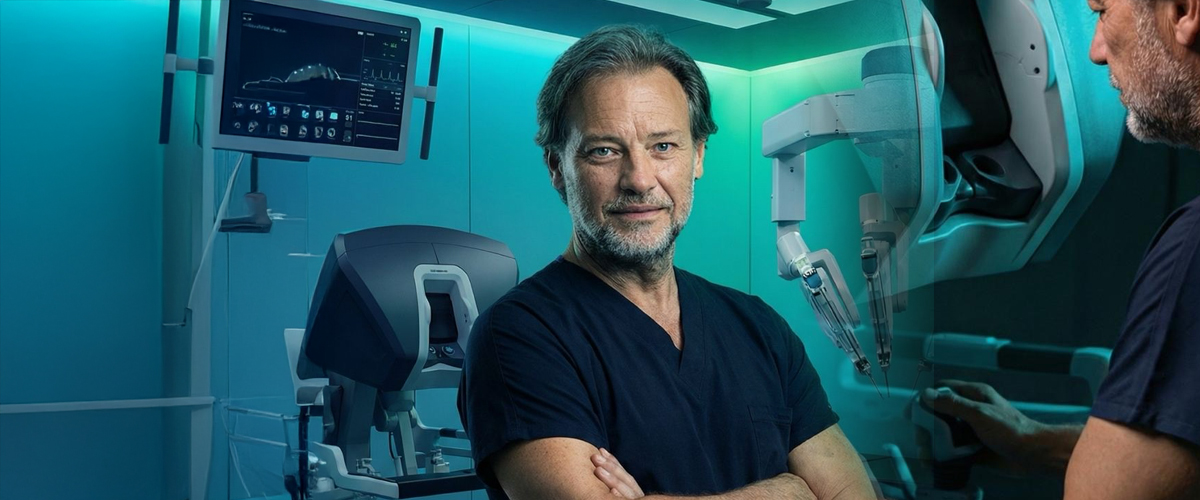
Prof. Dr. Tibet ErdoğruAdvanced Robotic Surgery
Prof. Dr. Tibet Erdoğru next to a robotic surgery system
Urologic oncology · Patient information

RPLND: An important surgery in testicular cancer treatment that requires experienceProf. Dr. Tibet Erdoğru - Advanced Robotic Surgery

Careful patient selection, precise surgery and a personalised approach to treatment.

Prof. Dr. Tibet Erdoğru
Urology & Robotic Surgery
Robotic & laparoscopic approachPersonalised surgical assessmentInformation in 5 languages
01 / Understanding RPLND

Learn about an important
step in treatment.

Retroperitoneal
lymph node dissectionThe full name of the RPLND operation
Information is the first step towards taking a more informed part in your treatment.

What is RPLND?

In testicular cancer, some patients may need further treatment after the tumour in the testicle has been removed. One of these is RPLND, an operation in which the lymph nodes at the back of the abdomen are removed. The aim is to remove the lymph nodes to which cancer cells can spread and, where necessary, any tumour masses in this area.

Lymph nodes are like small checkpoints of the body’s defence system. Lymphatic drainage from the testicles reaches the lymph nodes around the major blood vessels inside the abdomen, and cancer cells can also spread to this area.

The area where RPLND is performed lies behind the peritoneum, the membrane lining the abdominal cavity, close to the kidneys and the major blood vessels. In suitable patients, the operation helps both to determine the spread of the disease and to treat it.

02 / Patient selection

When may it be needed?

RPLND is not performed on every patient with testicular cancer. The decision is personalised according to the characteristics of the disease.

01 — DURING INITIAL TREATMENT

Staging and treatment
in selected patients

After removal of the testicle, RPLND may be considered in selected patients depending on the type of disease and its risk features. Examining the removed lymph nodes helps determine the spread of the disease and the next treatment plan.

02 — AFTER CHEMOTHERAPY

Assessment of
residual masses

Masses remaining after chemotherapy may not contain only dead tissue; they may contain viable tumour or teratoma, which does not respond adequately to chemotherapy. Particularly in non-seminoma, surgery is considered for residual masses larger than 1 cm once tumour markers have normalised.

iIn seminoma, residual masses after chemotherapy are managed differently; initial follow-up with imaging and tumour markers is the standard. The approach that “every mass larger than 1 cm is operated on” does not apply to all patients. Tumour type, blood tests, the features of the mass and previous treatments are assessed together.
03 / Surgical approach

Experience matters
in a delicate area.

The lymph nodes to be removed lie in close proximity to the aorta, the vena cava, the renal vessels and the ureters. After chemotherapy, tissues can harden and adhere to surrounding structures, which may make the operation more complex.

Experience covers not only performing the operation but also identifying which patients will benefit, choosing the right method and, when necessary, working together with other surgical specialties.

01

Robotic and laparoscopic surgery

The camera and surgical instruments are inserted through small incisions. In robotic surgery too, it is the surgeon who performs the operation and controls every movement.

02

Choosing the right method for the patient

Small incisions may support recovery in suitable patients. Open surgery may be preferred for large masses or masses that are firmly adherent to surrounding tissues.

03

Safe and adequate surgery comes first

The goal is the safe and adequate removal of diseased tissue. A robotic approach is not suitable for every patient; the method is decided through individual assessment.

04 / Video
Press the play button to start the video.
More information, better-informed decisions.

Explore more videos on urology and robotic surgery.

Explore the YouTube channel
05 / What you should know

Before and after
surgery.

Discuss the risks, reproductive health and the follow-up process with your surgeon.

What are the possible risks of the operation?

Possible risks include bleeding, infection, injury to nearby organs or blood vessels, a temporary slowing of bowel movements and a build-up of lymphatic fluid in the abdomen. The risks vary depending on the extent of the operation and previous treatments.

How are sexual function and fertility affected?

The nerves that allow semen to be ejaculated are located in this area. If these nerves are affected, the amount of semen released at orgasm may decrease or disappear. This is not the same as losing erections; however, it can affect the ability to father a child naturally. Nerve-sparing techniques may be considered in suitable patients.

When should sperm freezing be discussed?

Plans for having children and the option of sperm freezing should be discussed before treatment begins. Because chemotherapy can affect sperm count and quality, planning is done before chemotherapy whenever possible. For patients who have already been treated, the options are assessed individually.

Is robotic surgery suitable for every patient?

No. The size of the mass, its relationship to the major blood vessels and surrounding organs, previous treatments and the patient’s general condition are assessed together. Open surgery is preferred when necessary. The priority is the safe and adequate removal of diseased tissue.

What should I ask during my consultation?

You can ask: “Why is RPLND recommended for me?”, “What are my alternatives?”, “Which surgical method is suitable?”, “What are the expected benefits and risks?” and “What can be done to protect my reproductive health?” Your pathology report, blood tests and imaging results help with the assessment.

Contact & appointments

Let’s evaluate your
treatment together.

To learn more about RPLND and robotic surgery or to book an appointment, please contact our clinic.

Call for an appointment
CLINIC PHONE+90 549 804 03 08PROF. DR. TİBET ERDOĞRU CLINIC
Levent Mahallesi, Hacı Adil Caddesi, Zerrin Sokak
No: 2/2, 34330 İç Levent, Beşiktaş / Istanbul, Türkiye
View on map ↗Contact page ↗
Prof. Dr. Tibet Erdoğru
Contact & appointments
Call the clinic ↗